What makes a bio useful?
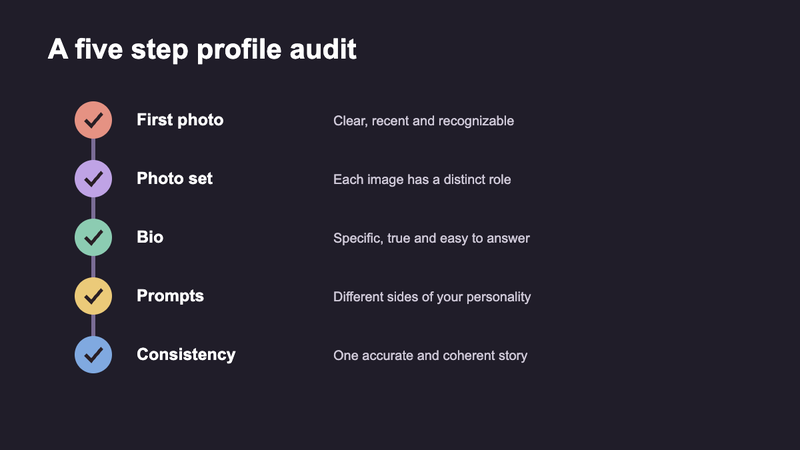
A useful bio contains specific material a match can respond to. Replace broad labels with small evidence. “I love food and travel” says little; “I plan trips around neighborhood bakeries and will cross town for good noodles” creates several conversation openings.
Write in your normal voice and keep the claims true. Mention what you enjoy, what your ordinary week looks like or what you hope to share with someone. You can state relationship intentions clearly without turning the bio into a list of demands.
Humor works when it sounds like you. A borrowed one-liner may earn attention but makes it harder to build a coherent impression across the rest of the profile.
How can prompts start better conversations?
Treat each prompt as a doorway. The answer should reveal a preference, story or point of view that gives someone an obvious first message. Hinge describes its Convo Starters as personalized suggestions based on information from a person’s profile, which reinforces the value of concrete profile content.
Avoid using three prompts to repeat the same trait. One might show your weekend routine, another your sense of humor and another what you value in a relationship. Together, they should provide range.
Good prompt: “My ideal Sunday starts with a farmers’ market and ends with a movie I will overanalyze.” It is specific enough for someone to ask about food, films or Sunday plans.
When should you use a dating profile analyzer?
Use analysis when you want a repeatable checklist or an outside perspective. A dating profile analyzer can help identify vague writing, repetitive photos or missing conversation hooks. Run it after drafting the profile, then review every recommendation rather than applying changes automatically.
Protect your privacy. Remove screenshots containing full names, workplace details, location data, children’s faces or other sensitive information before uploading them to any third-party tool. Read the service’s privacy terms and follow your workplace or personal data policy.
An analyzer cannot know whether a joke feels natural to you or whether a photo represents your current life. Let it surface questions; keep human judgment in charge.
Does the whole profile tell one coherent story?
Review the profile as a stranger would. Photos, bio and prompts do not need to repeat each other, but they should not contradict one another. If the bio says you prefer quiet weekends while every photo shows a large party, add context so both sides make sense.

Check whether the profile creates at least three natural openers. If you cannot imagine what a thoughtful match would ask, add a detail. Check tone as well: constant self-deprecation can obscure your strengths, while a long list of dislikes can feel defensive.
Pew Research Center’s study of U.S. online dating experiences documents both positive experiences and concerns, including unwanted behavior. Present yourself honestly, avoid exposing unnecessary personal details and use platform safety features whenever an interaction feels wrong.
How often should you update the profile?
Review it after a meaningful change in appearance, interests, location or relationship goals. Otherwise, a quick check every few months is enough. Update weak images and stale references rather than rebuilding the entire profile after a quiet week.
Judge changes over a reasonable period and focus on the quality of conversations, not only match count. A clearer profile may narrow the audience while improving relevance.
FAQ
How many photos should a dating profile include?
Use enough photos to show a clear, current and varied picture of your life. Quality and distinct purpose matter more than filling every available slot.
Should I include group photos?
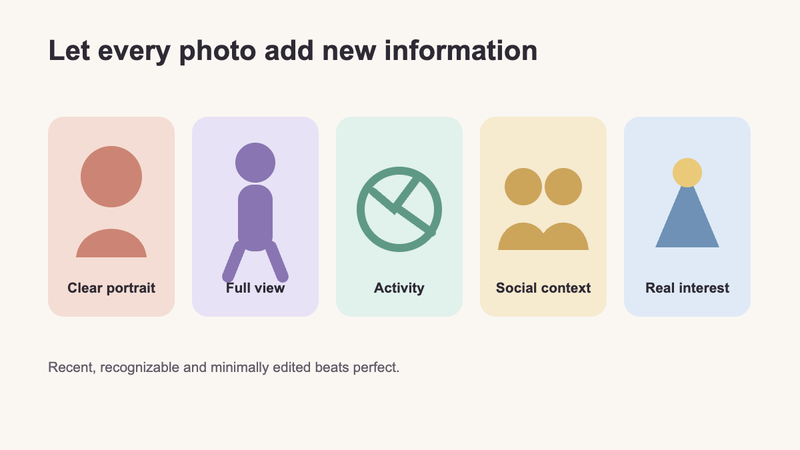
One can add social context if you are easy to identify. Avoid making viewers guess who owns the profile, and respect other people’s privacy.
Can a dating profile analyzer choose my best photo?
It can flag visual or structural patterns, but it cannot fully judge accuracy, personal comfort or how well a photo represents you. Use its feedback as one input.
Should I list everything I do not want?
State important boundaries and intentions clearly, but emphasize the life and connection you do want. A profile built mainly from exclusions offers fewer positive conversation hooks.