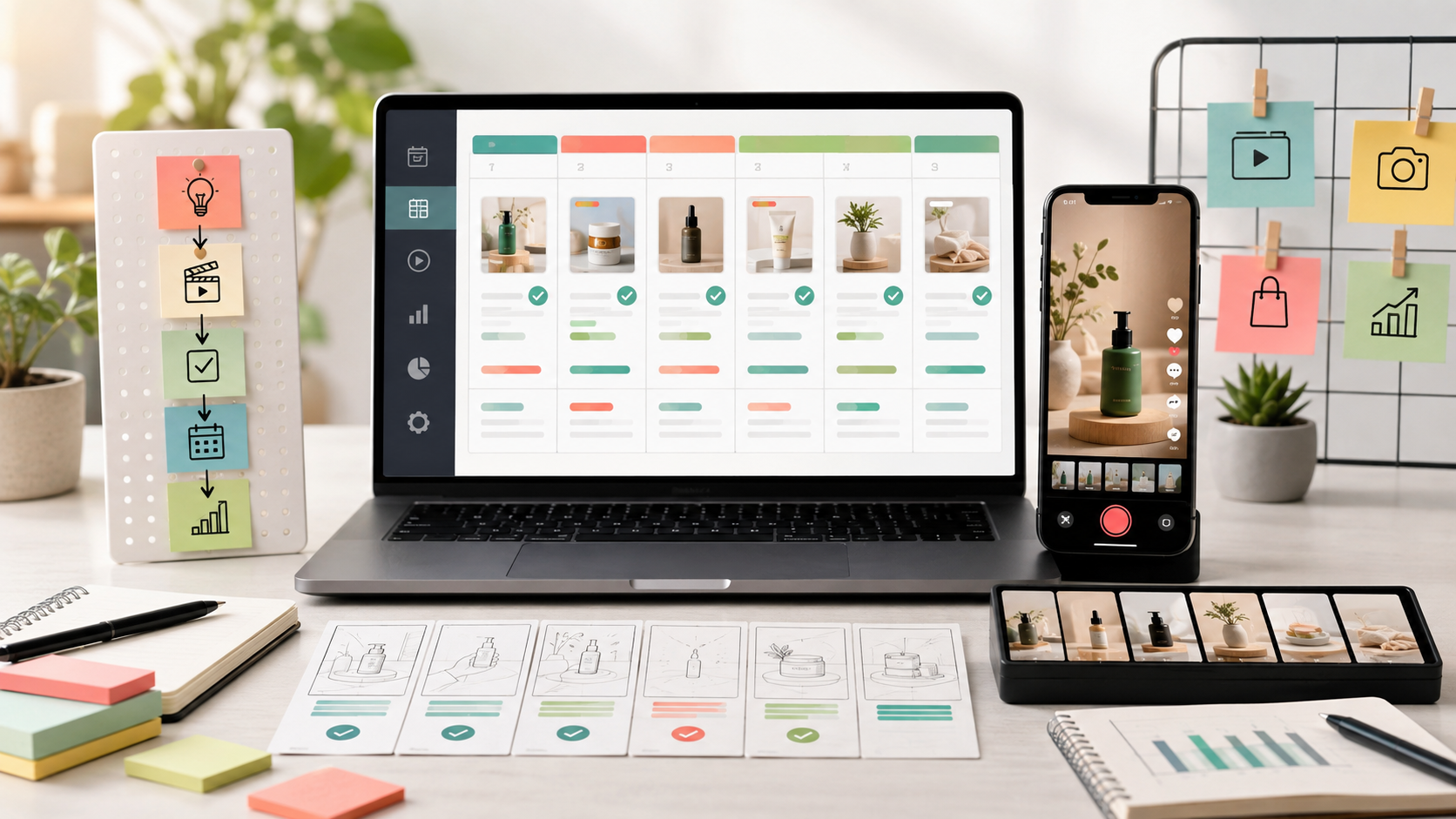
Here is how to post consistently on TikTok: choose a pace you can maintain, plan several posts before you create, prepare more than one finished video at a time, review each one, and schedule approved content in advance. The goal is to stop making every decision on posting day. A repeatable TikTok workflow should tell you what to make, where each video will come from, when it will publish, and what result will shape the next plan.
This guide helps you find whether ideas, filming, editing, approval, or publishing is breaking your routine. It then shows how to build a weekly TikTok content plan, choose a realistic posting frequency, prepare content through filming, repurposing, or ready-to-post sources, and use scheduling and performance data without turning consistency into constant production. If a lack of finished content is breaking your schedule, use Moras ready-to-post videos to add reviewed product content to the queue.
What Consistent TikTok Posting Actually Requires
Consistency is not the same as posting as often as possible. It means maintaining a useful rhythm long enough to learn what your audience watches, skips, saves, shares, or acts on.
A working system has five connected parts:
| Part | Decision to make | Useful output |
|---|---|---|
| Direction | What should the account help or entertain people with? | A small set of repeatable content themes |
| Planning | What will each upcoming post do? | A one-week content plan |
| Content supply | How will each planned video become a finished asset? | Filmed, repurposed, low-effort, or ready-to-post videos |
| Publishing | When will each approved video go live? | A realistic TikTok posting schedule |
| Review | What should be repeated, changed, or stopped? | Decisions for the next week |
If one part is missing, the calendar eventually breaks. Scheduling cannot solve a shortage of finished videos. More ideas do not help when editing is the real bottleneck. Posting more frequently also creates little value when nobody reviews the results.
Find the Bottleneck That Keeps Stopping You
Before building a new routine, identify the step where posts repeatedly stall. Different bottlenecks need different fixes.
| What keeps happening | Likely bottleneck | Practical response |
|---|---|---|
| You sit down to create but do not know what to say | Ideas and direction | Keep three repeatable themes and collect questions from comments, search, and previous posts |
| You have ideas but rarely have time to record | Filming capacity | Film several related videos in one setup or create videos without a new shoot |
| Your camera roll is full of unfinished clips | Editing capacity | Edit similar videos together and reuse a simple caption and visual system |
| You need product content but cannot produce enough finished videos | Content supply | Add reviewed ready-to-post videos to the plan instead of making every asset from scratch |
| Finished videos wait for days without going live | Approval or publishing | Use a clear review status, then schedule only approved posts |
| You post regularly but do not know what to repeat | Performance review | Review a small set of useful metrics before planning the next week |
This table is a routing tool, not a list of tasks everyone must complete. Fix the bottleneck that is actually interrupting your schedule. Adding more steps elsewhere usually creates a busier workflow without making it more reliable.
Choose a Posting Frequency You Can Maintain
There is no single posting frequency that fits every TikTok creator. A creator making detailed tutorials cannot use the same production pace as an account publishing short reactions or product clips.
Start with a two-week test. Choose the minimum weekly pace you can maintain without skipping your review standard. If you are currently inconsistent, begin with a smaller repeatable schedule instead of forcing daily posting. Increase the pace only when you can keep enough approved content ready and still learn from each post.
Whatever pace you choose, publish one video at a time. Avoid releasing several similar posts together simply because they were prepared in the same session.
Plan One Week Before You Create
A useful TikTok content plan does more than assign dates. It decides what each post should accomplish before production begins.
Choose a Few Repeatable Content Jobs
Give each planned post one clear job. Most creator accounts can work with a small mix such as:
- Reach: introduce a relatable problem, useful idea, or timely conversation
- Trust: demonstrate knowledge, show a process, answer a question, or provide proof
- Action: invite a comment, profile visit, follow, click, or product consideration
These are content jobs, not rigid formats. A tutorial can build trust. A response to a comment can create reach. A product demonstration can build trust and invite action when the claim is accurate.
Build a Simple Weekly Content Calendar
For each slot, write only the information needed to move the post forward:
| Planning field | What to record |
|---|---|
| Audience question | The problem, curiosity, or decision the post addresses |
| Content job | Reach, trust, or action |
| Format | Talking head, demonstration, reply, slideshow, voiceover, screen recording, or another suitable format |
| Content source | New filming, existing footage, repurposed content, or a reviewed finished option |
| Status | Planned, in production, needs review, approved, scheduled, or published |
Plan one week at a time unless your subject is highly predictable. A shorter window makes it easier to respond to comments, product changes, and timely topics without discarding a month of work.
Prepare Content Before Posting Day
The best preparation method depends on what slows you down. You do not need to use every method in the same week.
Batch Similar Production Tasks
When setup time is the problem, group similar work. Record several talking-head videos while the camera and lighting are ready. Capture demonstrations for more than one script while the product is available. Edit videos with the same format in one block.
Batching works because it reduces repeated setup and task switching. It does not mean every video should look or sound identical. Change the question, hook, example, proof, or visual focus so each post has a distinct reason to exist.
Repurpose an Idea, Not Just the Same File
Use a previous post as evidence for what deserves another angle. A question in the comments can become a response video. A longer explanation can become a short checklist. A useful demonstration can be revisited with a different opening or a clearer example.
Do not assume that repeatedly uploading the same finished file creates a sustainable content system. Repurposing should give the viewer a new reason to watch.
Mix High-Effort and Low-Effort Formats
Not every post needs a full shoot. Comment replies, voiceovers, slideshows, screen recordings, simple demonstrations, and concise updates can keep the plan moving between larger productions. Choose the format that communicates the idea clearly, not the format that looks most complicated.
Use Ready-to-Post Videos When Content Supply Is Missing
Ready-to-post videos are another content source, not the entire consistency strategy. They are most useful when the weekly plan needs finished options and the creator does not have time to film or edit every post.
Moras provides a daily selection of completed shoppable videos to review. If those options do not fit, choose a product worth testing and review a newly prepared 15-20 second video after about five minutes. The creator still decides whether the product, angle, claims, caption, hashtags, and product link fit the account before publishing.
Use this option only for suitable product-led posts. Film firsthand content when personal fit, taste, comfort, use, or long-term results are part of the proof viewers need.
Review and Schedule Approved Posts
A content calendar becomes reliable only when every video has a clear status. Use needs changes, approved, or skip during review. Do not schedule a video while its claims, caption, rights, disclosure, or destination link are still uncertain.
Before approval, check:
- The video matches the account’s audience and planned content job
- Check whether the opening is clear
- Spoken, written, and visual claims are accurate
- Music, footage, and other assets are usable on the intended account
- Write a caption that matches the video
- Choose hashtags that match the video
- Any product, affiliate, or brand relationship is disclosed clearly
- Links, offers, prices, stock, and seasonal wording are current
Creators promoting products are responsible for clear affiliate disclosure. Keep that check inside the approval step instead of adding it after the post is scheduled.
Once a video is approved, use Oumomo to publish or schedule the approved post. Leave open slots when your account depends on current conversations, comment responses, restocks, or time-sensitive updates.
Use Performance to Plan the Next Week
Consistency should produce better decisions, not just a larger archive. At the end of the week, compare posts that had the same content job or format. Do not compare every video as if it was trying to achieve the same result.
Ask:
- Which openings kept the right viewers watching?
- Which topics earned useful comments, saves, shares, profile visits, or clicks?
- Which formats took more production time than their result justified?
- Which questions or objections appeared in comments?
- Which product, topic, or angle deserves another test?
Turn those answers into next week’s plan. Repeat the useful idea with a new example or angle. Change one weak element when possible so the next result teaches you something. Stop formats that repeatedly consume more time than they are worth.
Common Consistency Mistakes to Avoid
Choosing a Pace Before Checking Capacity
An ambitious schedule fails when it requires more finished content or review time than the creator can supply. Start with a pace you can complete, then expand from evidence.
Treating Every Post as a Large Production
If every idea requires a new location, complex edit, or perfect delivery, the plan has no room for ordinary weeks. Use different effort levels while maintaining a clear standard.
Filling the Calendar with Repetitive Posts
Preparing content in batches can make several posts feel interchangeable. Vary the viewer problem, opening, proof, example, or requested action.
Scheduling Before Reviewing
Scheduling is the last operational step, not a substitute for content approval. A queue of uncertain posts only moves mistakes into the future.
Ignoring What Previous Posts Taught You
A fixed calendar can keep an account active while preventing it from improving. Reserve time to review results and adjust the next week.
Conclusion
The practical answer to how to post consistently on TikTok is to separate planning, content preparation, approval, publishing, and review. Choose a realistic pace, prepare several posts before they are needed, and give every video a clear status.
Use the content source that fits the bottleneck. Batch filming can reduce setup time. Repurposing can extend a useful idea. Low-effort formats can protect the schedule. Ready-to-post videos can supply suitable finished options when production capacity is limited. Scheduling then distributes approved content, while performance tells you what to prepare next.
Frequently asked questions
How do I stay consistent on TikTok?
Choose a posting pace you can maintain, plan one week of content at a time, prepare videos before posting day, review them, schedule approved posts, and use performance to decide what belongs in the next plan.
How often should I post on TikTok?
There is no universal number for every creator. Start with a two-week test at the minimum pace you can maintain without lowering quality or skipping review. Increase the frequency only when your content supply and workflow can support it.
Should I post on TikTok every day?
Only if you can prepare, review, and publish useful videos every day without making the account repetitive. A smaller sustainable schedule is more useful than daily posting followed by a long gap.
How far ahead should I plan TikTok content?
One week is a practical starting window for most creators. It reduces daily decisions while leaving room for comments, trends, product changes, and timely ideas.
Can I stay consistent without filming every day?
Yes. Batch-record several videos, repurpose useful ideas, mix in lower-effort formats, or use reviewed ready-to-post content when it fits the account. Posts based on personal product experience still require firsthand filming or evidence.
Is scheduling enough to stay consistent on TikTok?
No. Scheduling helps only after suitable videos are finished and approved. A complete system also needs clear topics, reliable content sources, review, and performance feedback.