Do not schedule three heavy meals back to back. Begin with breakfast or a light noodle bowl, use lunch for dumplings and small plates, then reserve dinner for a shared local meal. Add a pastry, tea or seasonal fruit between neighborhoods if you still have room.
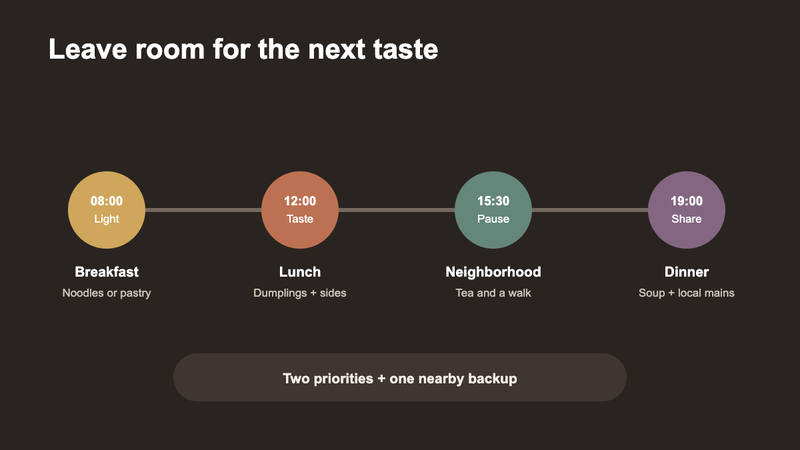
A practical Shanghai food guide can help you recognize signature dishes and plan them around other sightseeing. Build options rather than a minute-by-minute route because queues, weather and appetite will change the day.
Choose two food priorities and one backup near each area. A flexible plan lets you skip an overcrowded stop without feeling that the trip has failed.
Which neighborhoods are useful for exploring?
The former French Concession and nearby streets offer a mix of long-running local shops, bakeries, cafes and contemporary restaurants. The Old City area can combine traditional snacks with historic sightseeing, though the busiest zones may feel tourist-oriented.
Areas around major commercial streets and malls are convenient for groups that want comfort, predictable facilities and many options in one place. Residential neighborhoods can reward a slower walk and a local breakfast, but language support and opening information may be less consistent.
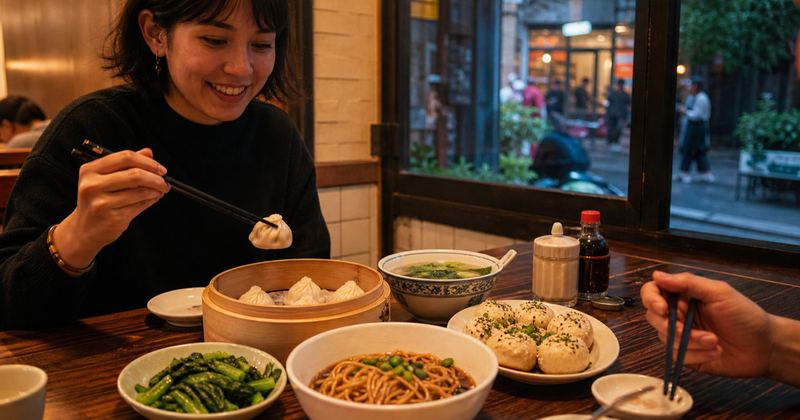
Shanghai’s official site publishes a broader dining guide and updates visitor resources over time. Check the current listing rather than assuming a restaurant mentioned in an older article is still operating unchanged.
How do you order with dietary restrictions?
Translate restrictions precisely before the meal and save them in Chinese on your phone. “Vegetarian†can be interpreted differently, so specify ingredients you cannot eat, including meat broth, seafood, eggs or dairy as relevant.
People with severe allergies should carry a professionally translated allergy card and confirm cross-contact risk. Small kitchens may use shared oil, utensils and preparation surfaces. If the staff cannot confidently answer, choose a simpler or more controlled option.
Ask about portion size before ordering several mains. Family-style dishes can be much larger than snack portions, and ordering too much makes it harder to taste widely.
What dining habits make the experience easier?
Carry both mobile payment and a backup method. Join queues clearly and keep a screenshot of the restaurant name and address in Chinese. At busy casual shops, you may order and pay before sitting; at table-service restaurants, payment may happen at the table or cashier.
Use the provided serving utensils when sharing. Tea may arrive automatically and could appear on the bill. Tipping is not generally expected in ordinary local restaurants, though international hotels and specialized venues may have different service arrangements.
Check the bill before paying and keep your belongings close in crowded dining rooms. These are ordinary travel habits, not reasons to avoid spontaneous stops.
How can you find a good restaurant nearby?
Look for a focused menu, steady local traffic and food being prepared or replenished regularly. A famous name with many branches can still vary by location and time of day. Recent local reviews are more useful than an old viral post.
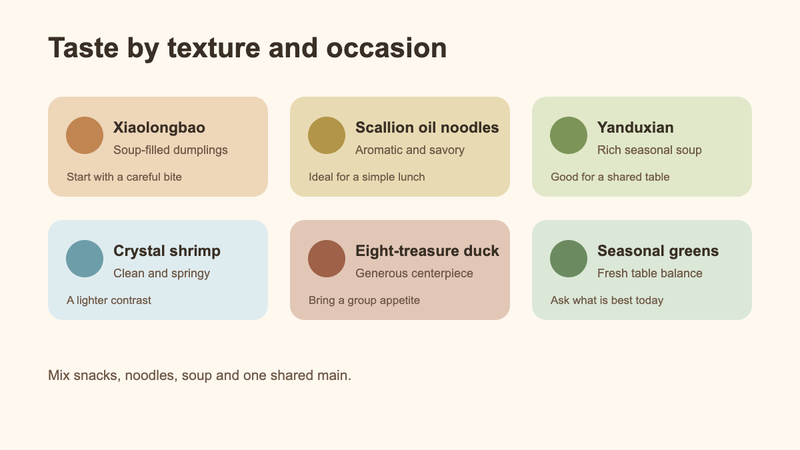
Ask hotel staff or a guide a specific question: “Where would you go nearby for scallion oil noodles at lunch?†Specific requests produce better recommendations than “Where is the best restaurant in Shanghai?â€
For a short visit, prioritize convenience and variety. The meal that fits naturally into the day often becomes more enjoyable than a long cross-city journey followed by a two-hour queue.
FAQ
Is Shanghai food always sweet?
Some local dishes use noticeable sugar or sweet-savory seasoning, but the cuisine is varied. Soups, seafood, noodles and seasonal vegetables offer many different profiles.
What is the safest way to eat xiaolongbao?
Lift the dumpling gently into a spoon, open a small part of the wrapper and let the hot broth cool before eating it.
Can vegetarians eat scallion oil noodles?
Some versions may be suitable, but recipes can include animal-based seasonings or be prepared with shared equipment. Ask about ingredients each time.
Do Shanghai restaurants require reservations?
Casual shops often do not, while popular or higher-end restaurants may. Check current booking practices, especially for weekends and groups.